
OUR THEORY OF CHANGE
OUR THEORY OF CHANGE
July 2026
Systemic change rarely moves in straight lines. A look at how we embraced the messiness and forged our own paths to co-author our Theory of Change.
Five laps around the sun: 4.7 billion kilometres is the distance we’ve travelled in what feels like five short years. Reflecting on this period, we’ve grappled with both immense change and an immunity to change simultaneously. We’ve grown our team and expanded island-wide, yet the systems we work in remain rigid. The evidence for the impact & integrity of our programs grows every day, yet we are constrained by compliance, regulations and reporting requirements.
This systemic work is inherently messy and over the last 5 years, we’ve had to create our own ‘desire paths’, to connect vision with current reality. Forging informal paths where formal paths fail has been intuitive. But it is not for the risk-averse.
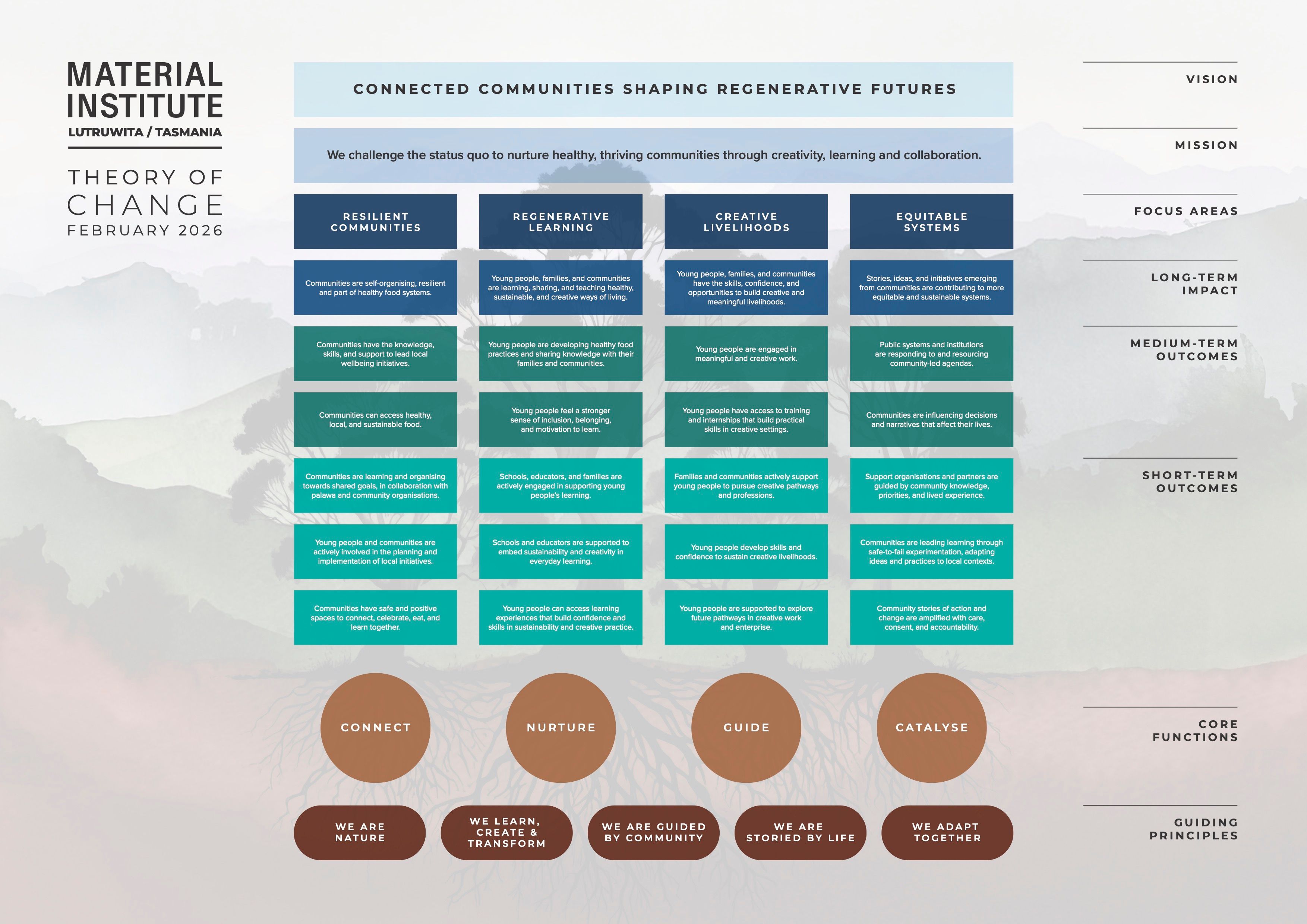
After 18 months of sitting with this messiness, through deep listening, dialogue, sense-making, and walking these paths together, our Theory of Change emerged. Click HERE for a detailed version you can zoom in on.
For those not familiar with this framework, our theory of change expresses the future we envisage, the outcomes we’ll see as we move towards that vision and the impact generated. At MI we hold this lightly - as a compass, rather than a map. We acknowledge that straight lines in complex systems are few and far between, and predicting linear paths between a current state and a fixed future goal can be dangerous and counterintuitive at best. Whilst we can influence some of the conditions in which we work, many are out of our control.
So why pursue a theory of change at all?
Having grown quickly as a team in our first few years, with expanded activities to fulfill an ambitious strategic plan, we quickly outgrew the bespoke niche carved out when MI was first established. By 2023, there were clear patterns surfacing of our strengths and what worked well. The anecdotal stories of impact were also coalescing, but we needed a more robust way of exploring the validity of what we were hearing, feeling and seeing.
Another insight that emerged from this process is that it made the breadth and range of our work visible. We cover a lot of ground, with a small diverse team across community events, workshops and our 24 Carrot program. We needed a way to locate ourselves in the systems we work in, from which we could ‘story’ our impact.
At MI our work is driven by the vision ‘Connected communities shaping regenerative futures’. To bring that to life we framed up four strategic focus areas:
Through Resilient Communities we grow local capacity, food security, and community-led wellbeing initiatives. Regenerative Learning emphasises real-world learning, social-emotional development, community engagement, intercultural understanding, and sustainability literacy. Unlocking training, enterprise, and employment pathways in creative fields is activated through Creative Livelihoods. And growing spaces to amplify community voices and stories, to influence broader systemic shifts and policy takes shape within Equitable Systems.
Whilst they appear separately on the page, they are very much entangled in, and made tangible through, their relationships to each other.
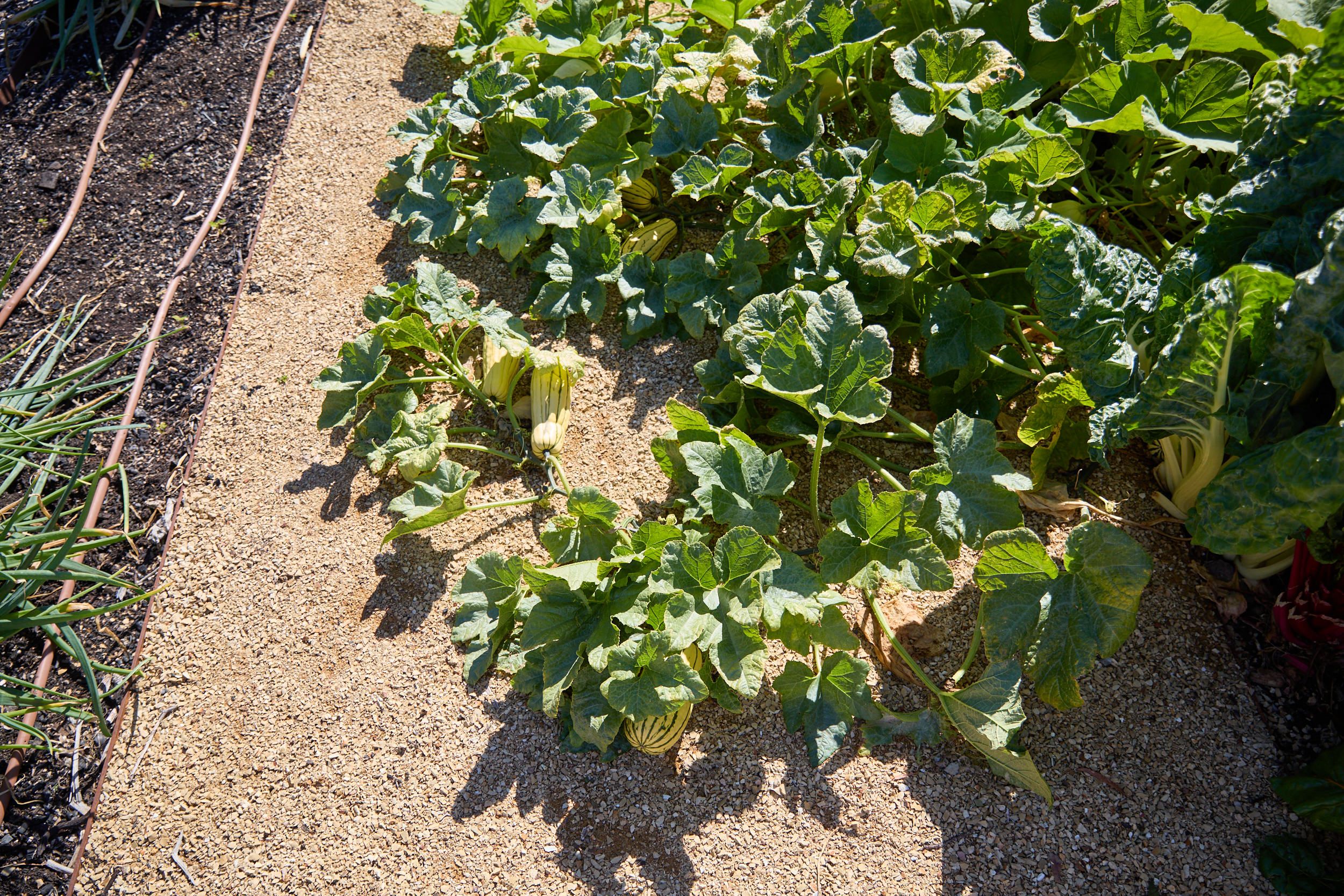
To illustrate this, let’s take 24 Carrot Gardens - our flagship food education program - which weaves across all four focus areas. From hands-on regenerative learning, that expands beyond sustainability education to reconnect us more deeply with a meta-narrative of living systems; to how food literacy contributes to community resilience and informs advocacy efforts on broader food systems transformation. And finally, through the lens of creative livelihoods, where multiple vocation pathways become visible through hands-on immersive learning, spanning horticulture to hospitality, art & science.
Like much of MI, including the internal systems and processes that inform how we show up, our ToC has been co-authored by our team. We’re incredibly proud of what it enables and represents. We share it now, not as a rigid framework or paved road with straight edges, but as a compass, to guide our journey.
In closing, an invitation: As you look at your own landscape, or the place of your belonging: where are the desire paths already forming around you, and what compass are you using to follow them?
I would love to hear from you hello@materialinstitute.org
If you want these thoughts straight to your inbox, you can subscribe to our substack.
Words by: SP, CEO, Material Institute
Photography: Yasmin Mund