
FRUIT TREES IN WINTER
FRUIT TREES IN WINTER
July 2026
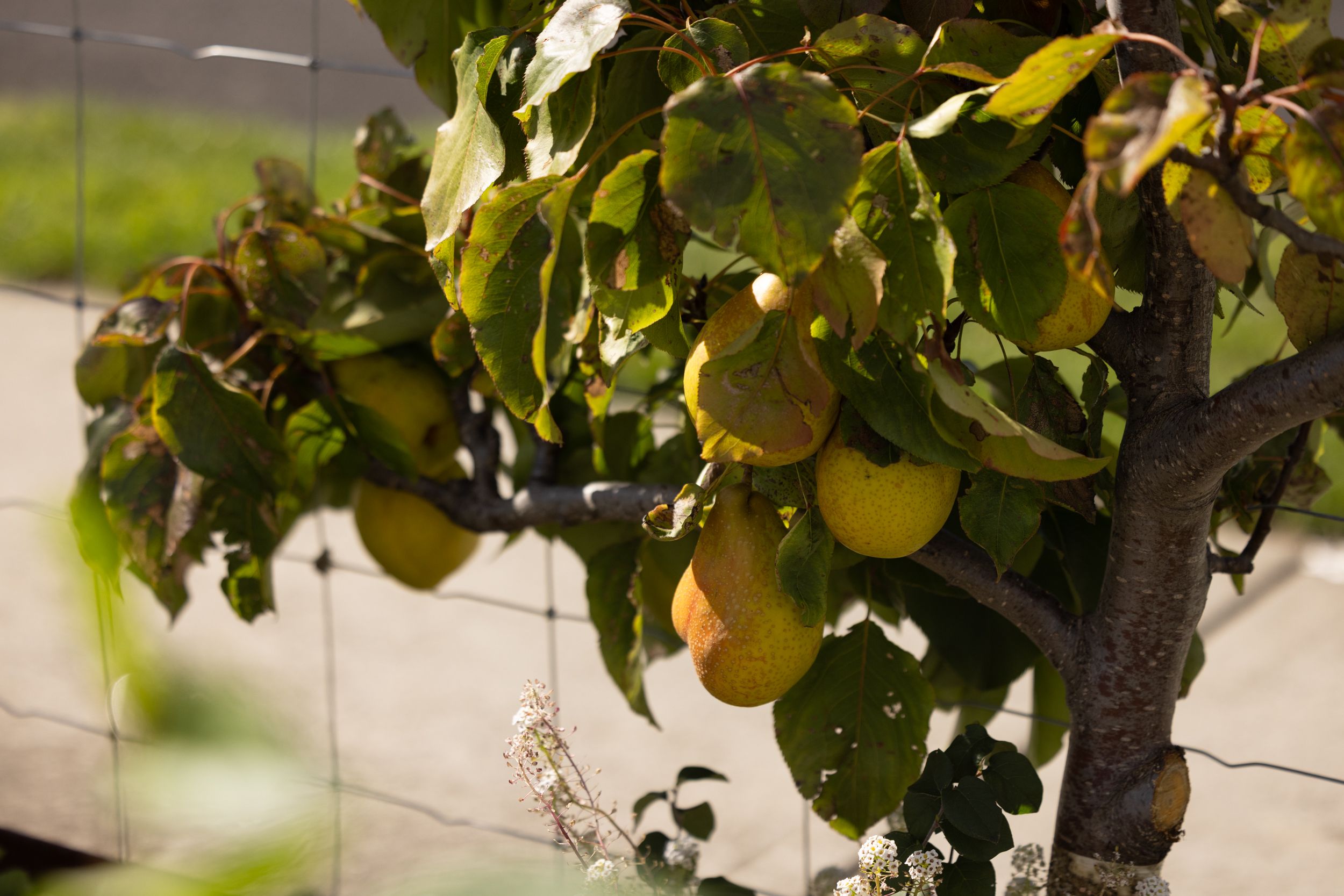
It's time to rug up and head outdoors to the orchard to tackle essential fruit tree maintenance. Your hard work now will ensure a bountiful harvest with peak flavor in the growing season ahead.
Bypass secateurs and a curved pruning saw are generally sufficient for most pruning tasks. If you have multiple trees or fruit trees that are fully mature, loppers are a great addition to your toolkit. Keeping your tools sterile & sharp will ensure clean cuts and avoid the spread of disease. Recommend using a mixture of 20% methylated spirits & clean water in a spray bottle for sterilising blades between trees.
Pruning schedules vary depending on variety. Apples, pears and quince are best pruned during late winter. Whereas, stonefruit including cherries, plums, peaches and apricots respond better to late summer pruning.
Wondering where to begin? This can be overwhelming particularly if you're faced with a fully mature tree that hasn’t had regular care. Dividing the process into focus areas allows for a more methodical and managable approach. Allow sufficient time to move around the tree, making small observations as you go. Pruning is really enjoyable once you gain confidence.
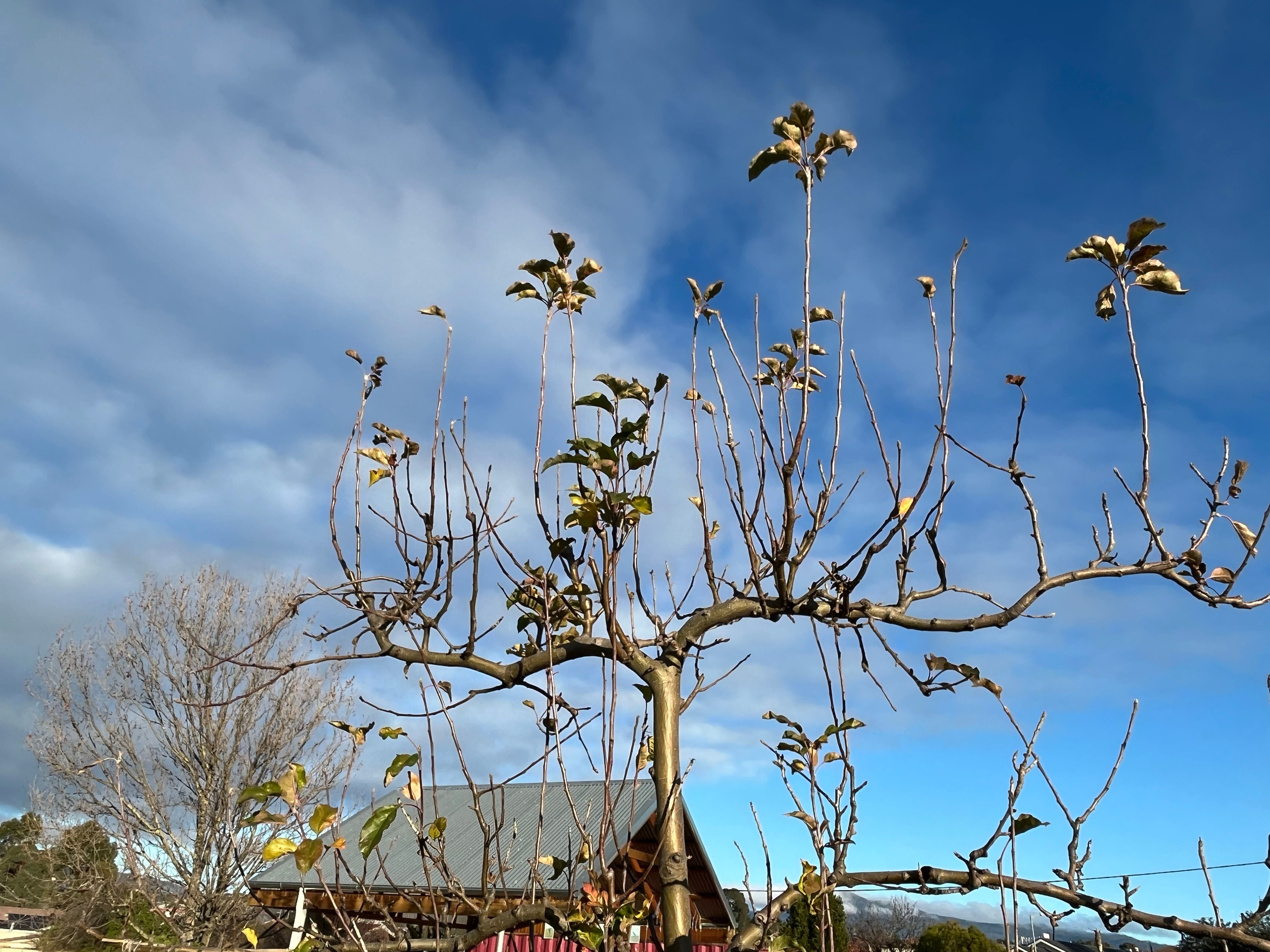
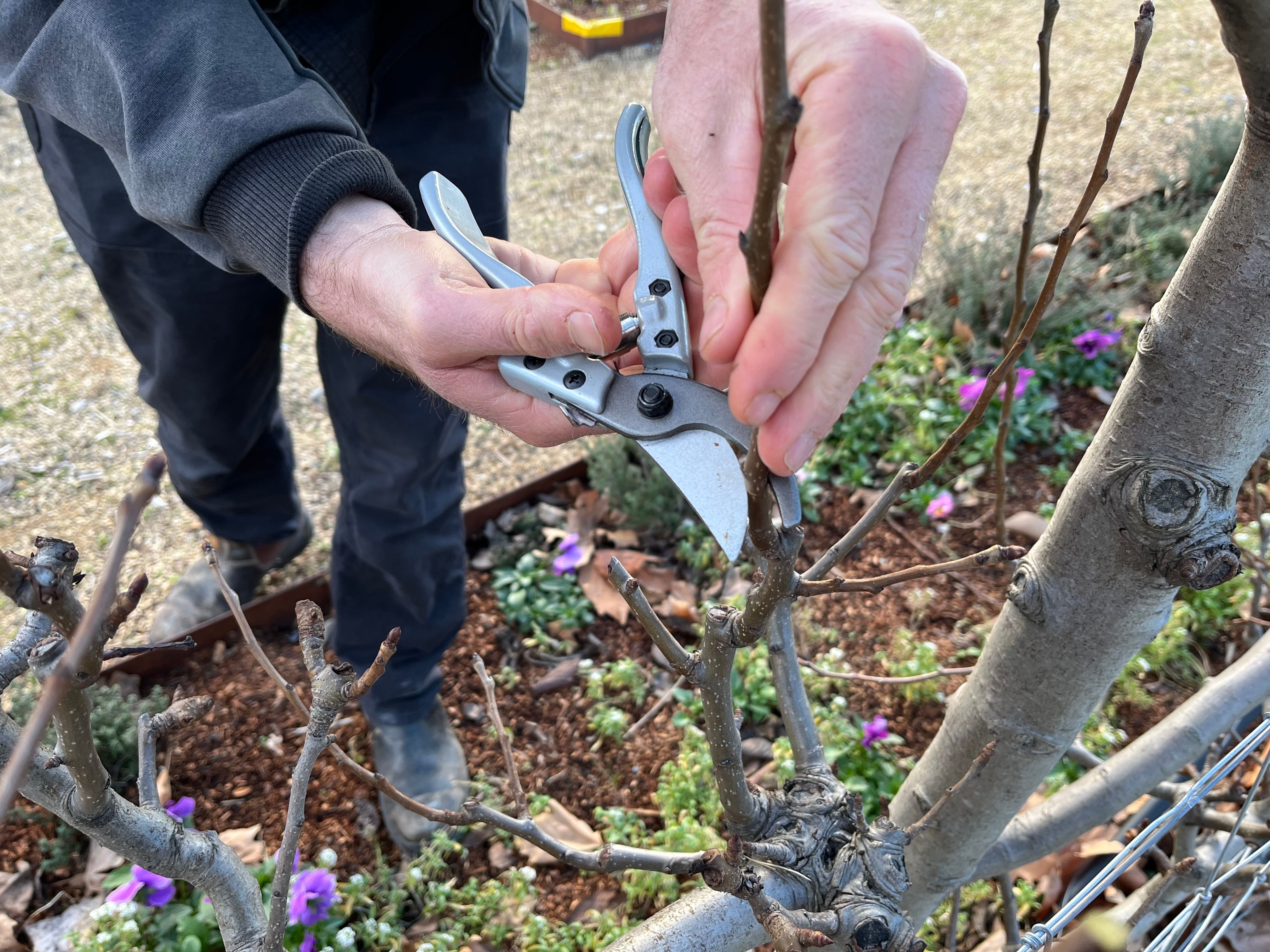
- Start with removing any dying or diseased or deadwood (the three D’s).
- Encourage an open vase shape by removing any branches that are rubbing or crossing over each other and those that are growing towards the centre of the canopy. This will increase light and air flow through the tree canopy and eliminate the risk of wounds and disease entry.
- Focusing on the base of the trunk, remove all suckers. For grafted varieties, remove all persistent vegetative growth below the graft intersection.
With the tidy up complete, now consider the height of your tree. It’s practical for harvest and seasonal maintenance that the fruit tree height does not exceed 2.5m. Height reduction can also be carried out after fruit harvest in late summer/autumn. This is recommended for more vigorous varieties.
- Prune the top-most growth back to maintain your desired height. Identify an outward facing bud and make a clean cut on a 45 degree angle. You can safely remove ⅓ of the tree canopy.
- When planting young bare rooted fruit trees height can be trained by cutting back overall height to between 60cm and 90cm. This encourages low branching.
Lastly, pruning is focused on encouraging a balance of vegetative growth and fruiting potential.
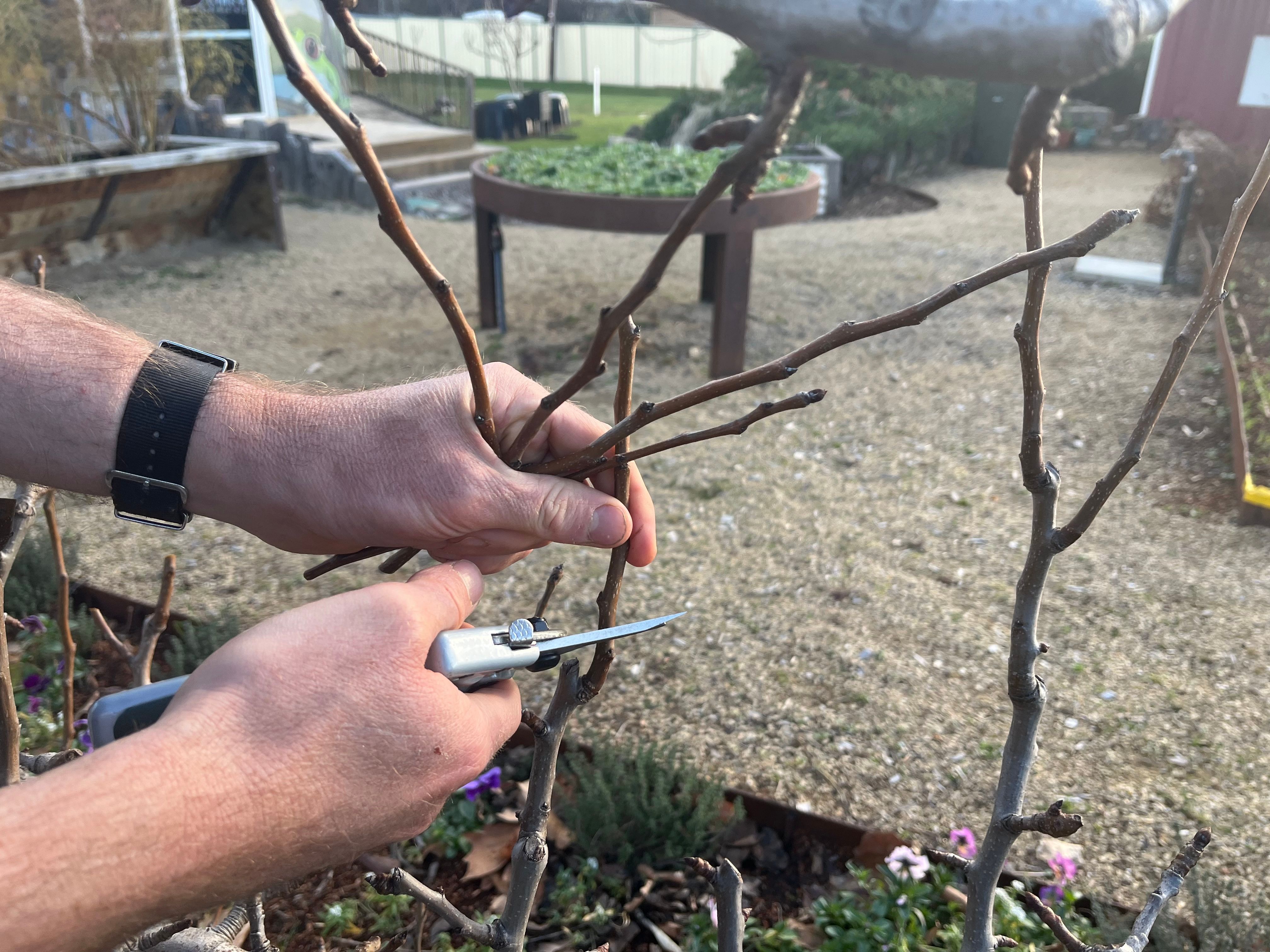
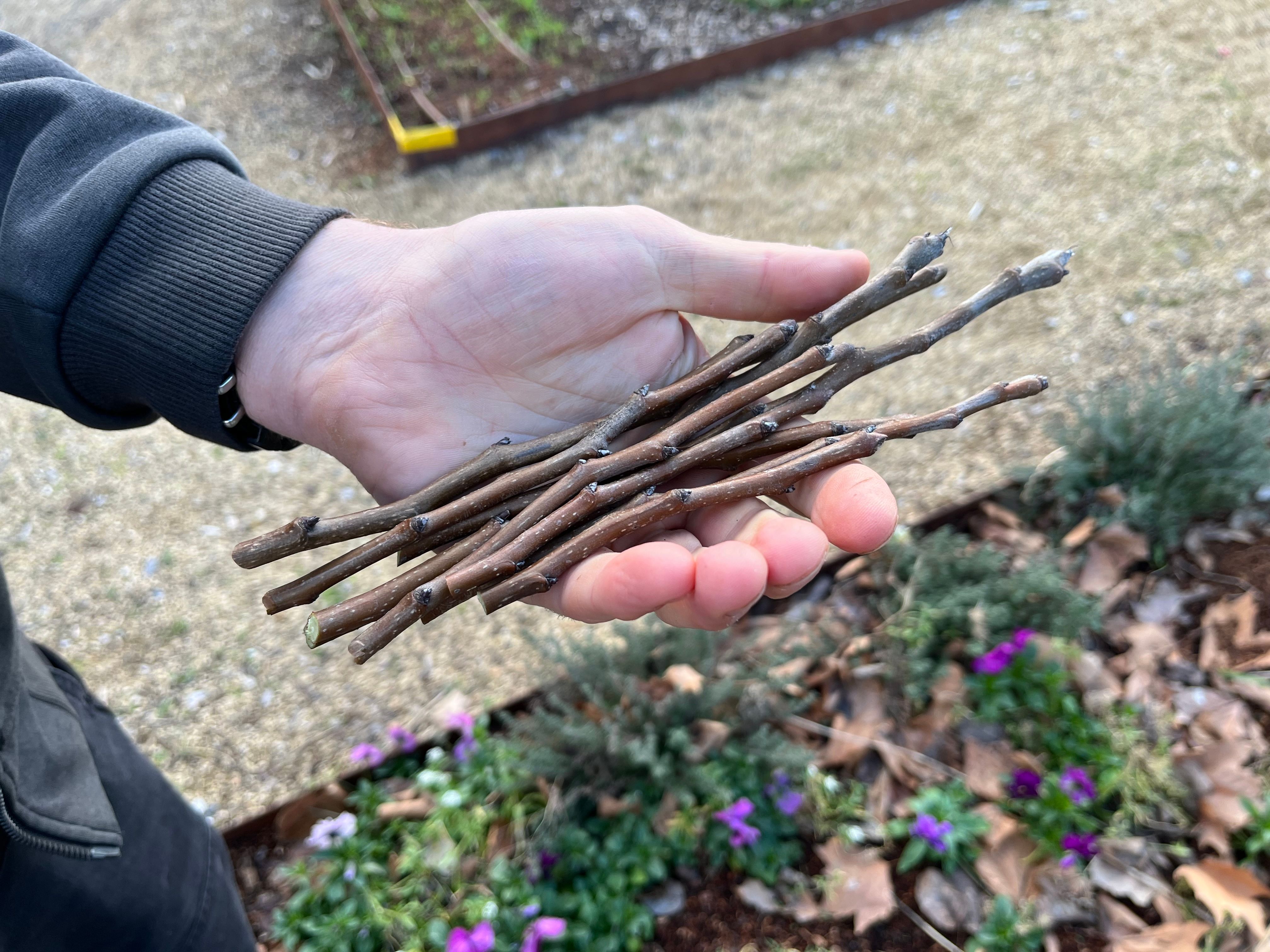
- Locate last seasons, new vegetative growth. This is the pencil-thin tips of the branches, and cut back by ⅓. Like before, cutting back to an outward facing bud to ensure the tree structure remains open. Ensure you preserve the fruiting buds and spurs, located further down the branch past the last season’s tip growth on the 2nd and 3rd years growth.
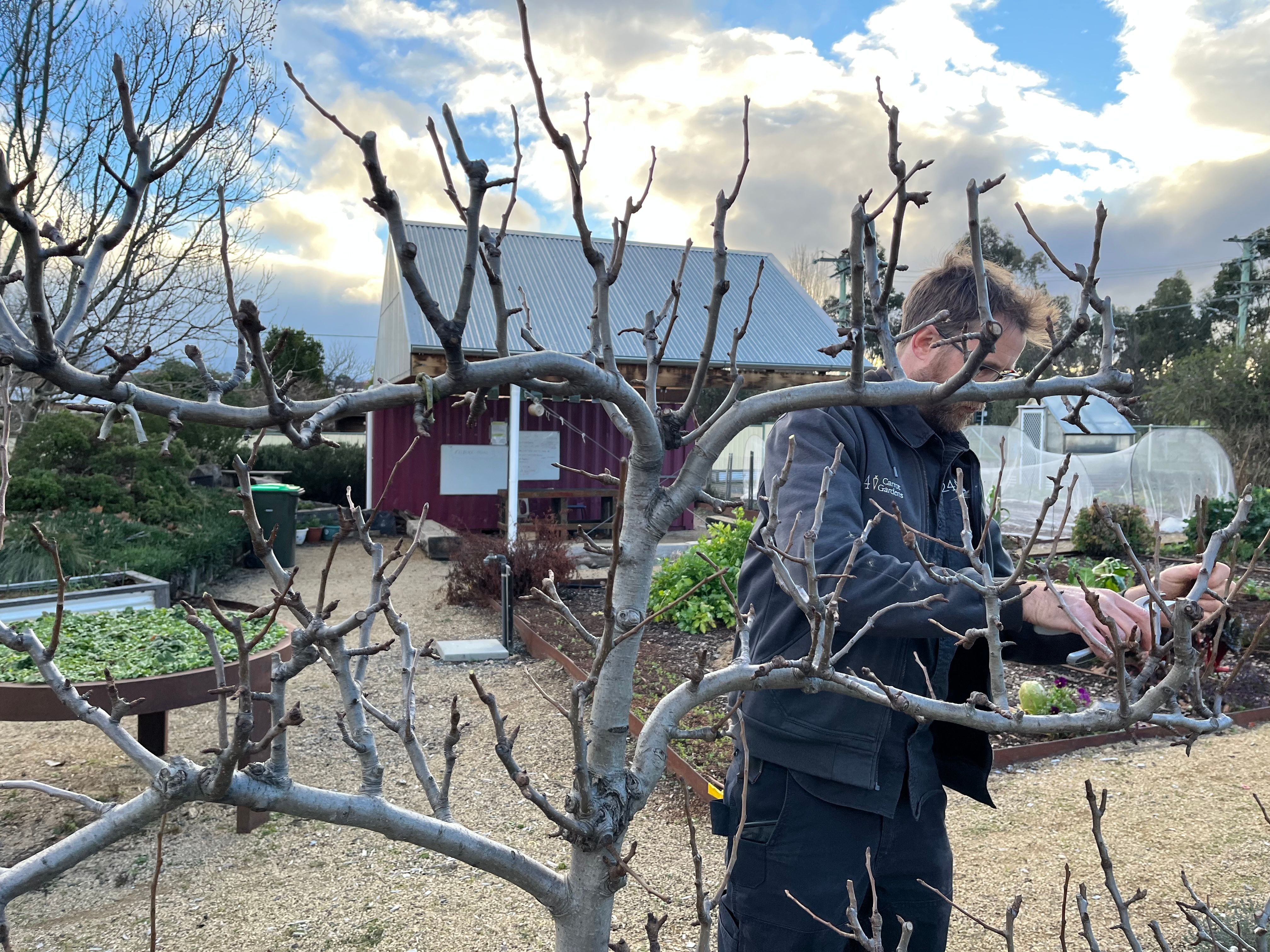
If garden space is limited, consider alternatives such as multi-grafted fruit trees, dwarf varieties, or espalier. Beyond their ornamental appeal, espaliered fruit trees are practical for small spaces and highly productive.
Apples and Pears thrive in the espallier style, stone fruit & plums also do well, but be aware the more vigorous the variety the more management they will need. The most economical option for purchasing fruit trees is during winter as bare rooted stock, available from most local nurseries. A strong framework is essential to support the weight of a fully mature fruit tree.
- Once planted, formative pruning is carried out to establish the tree's permanent espalier structure. This includes the first cut, which can be daunting. The main leader is cut just above the lowest wire to force lateral growth. During the growing season the two strongest branches are selected and tied down to the support wire. The leader is then grown on the next tier, where it is then cut, to again force lateral growth. This process is repeated to build each tier.
- Once the espalier framework is established summer pruning to control excessive growth is necessary. Trim back vegetative growth to fruiting buds & spurs to maintain the desired espalier shape.
Experiment with espalier shapes to enhance ornamental interest in your food garden including; stepover, fans, cordon and candelabra styles.
Dispose of fruit tree prunings responsibly. Smaller undiseased twigs & branches can be chipped and composted. Consider also, using medium to large branches throughout your garden as frames and trellising for climbing annuals plants.
Lastly, enjoy the process. Once you're feeling confident with these techniques, pruning becomes a mindful practice. Focussing your energy on the repetition of cuts, removing the old and directing new growth whist you daydream of the harvest to come.